
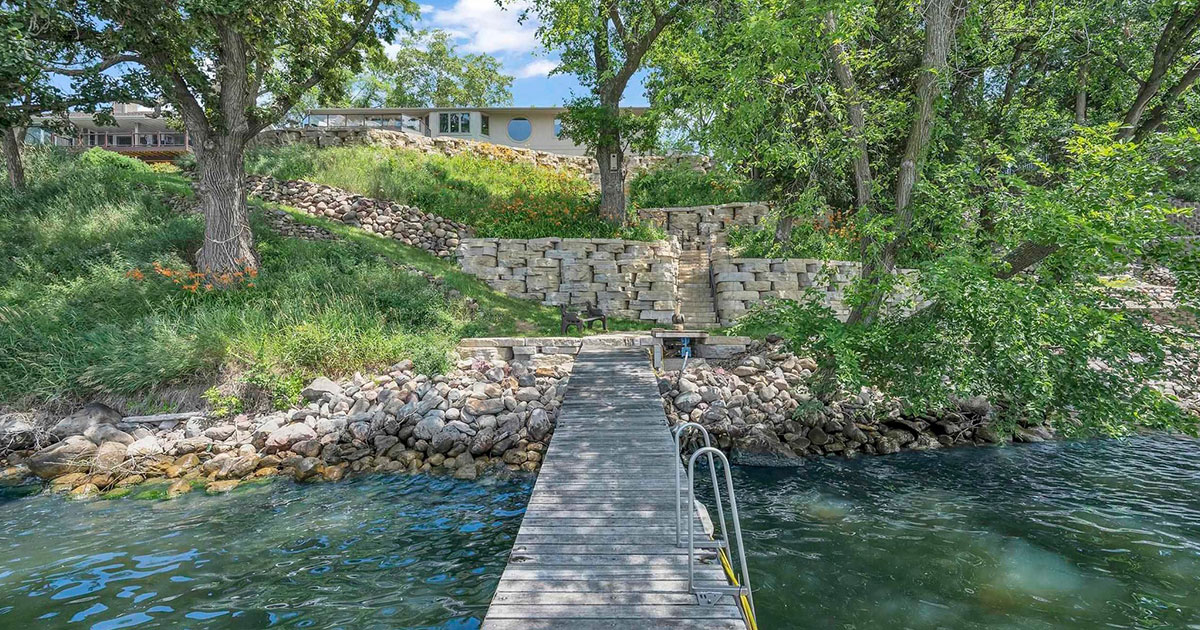
Buying lakefront property in Okoboji is not the same as buying a regular home, and the differences are the part that costs people money when they skip them. On the Iowa Great Lakes, the dock is regulated, not automatic: docks on a natural lake need a permit from the Iowa DNR, and most have to come out by December 15 each year. Your land stops at the water’s edge, the state owns the lakebed, and shoreline rules limit what you can build and how far out you can go. Most lake lots run on a private well and septic, and Iowa law requires a septic inspection before the property changes hands. Before you make an offer, check the dock, the shoreline rights, the well and septic, and which lake you are actually buying on.
Key Takeaways
- A dock on Okoboji is permitted through the Iowa DNR, not guaranteed with the lot. Confirm the permit before you buy.
- Most lake docks come out by December 15, and the state owns the lakebed below the water’s edge.
- Lakefront lots usually run on a private well and septic. Iowa requires a septic inspection at time of transfer.
- Frontage, water depth, the bottom, and wind exposure move value as much as the house does.
- Which lake you buy on, West, East, Spirit, Minnewashta, or the Gars, changes price, use, and competition.
Why is buying lakefront different from a regular home?
Buy a house in town and the process is familiar. You walk it, check the roof and the furnace, look at the comps, and write the offer. Lakefront is different because the house is only half of what you are buying. The other half is the water in front of it and your rights to use it, and that part never shows up in a listing photo.
We have walked plenty of buyers onto a dock in July who assumed the dock, the frontage, and the lake access all came with the deed, no questions asked. Sometimes they do. Often there is a wrinkle: a shared dock, a permit in someone else’s name, an easement running across the lot, or a stretch of soft, weedy bottom you cannot see from the deck. None of that is a dealbreaker on its own. All of it changes what the property is worth and what you can actually do with it. The plain version: on the lake, inspect the water as carefully as you inspect the house.
This is the lakefront-specific piece of the puzzle. For the wider picture, choosing a lake, picking a property type, lining up financing, see our guide to buying a lake home in the Iowa Great Lakes.
Do you need a permit for a dock on Okoboji?
Short answer, yes. The state regulates docks, hoists, and other structures placed on public water, and the Iowa Great Lakes are public water. You can read the specifics in the Iowa DNR dock and permit rules, but here is what matters to a buyer.
A dock on a natural lake like West Okoboji or Big Spirit can extend out to where the end sits in about three feet of water, within set length limits, and it has to be offset from the projection of the neighbor’s property line. The canals off West Lake and Okoboji Harbor have their own allowances. So do not assume the dock you are standing on is legal, permitted, and yours. Ask whose name the permit is in, whether it transfers with the sale, and whether the dock as built matches what was actually permitted. A common dock shared between adjoining properties is normal here and works fine, but you want that arrangement in writing before closing, not discovered after.
What shoreline and lake-level rules should you check?
A few things buyers from out of the area do not expect.
First, your ownership does not extend out over the open water. The lakebed below the ordinary high water line belongs to the state, so you own the shoreline and the frontage and you get dock and access rights, but not the water itself. On the Okoboji chain that boundary is a fixed elevation, not wherever the water happens to sit the day you tour. The chain is held by the dam at the lower end of Lower Gar Lake, and the state sets the Ordinary High Water Line for the lakes at about 1,397.8 feet above sea level. So the calm June waterline you walk is close to normal, but a wet or dry year moves it, and your rights track that fixed line.
Second, the dock comes out. Most non-permanent structures on Iowa public water have to be removed by December 15 unless they are built to survive the ice and marked for winter. If you are picturing a dock that stays in year round, that changes the math.
Third, watch for easements and shared access. On a lot of older lake plats, a back-lot owner holds a deeded path to the water across the frontage lot. That is not rare here, and it is exactly the kind of thing that lives in the title work rather than the listing. Read it before you fall for the view.
What about the well and septic on a lake property?
Plenty of lake homes here are not on city sewer. They run on a private well and a septic system, which is normal, but it is something you verify rather than something you trust. Iowa has a time of transfer rule: any property served by a private septic system has to be inspected before it is sold or the deed changes hands. The details are on the Iowa DNR time of transfer page. If the system comes back substandard, it has to be repaired, and who pays for that repair is part of the negotiation, so build it into your offer and your timeline early.
On the well, test the water and ask how old the well is and where it sits relative to the septic drainfield. An older cabin that has been in the same family for decades is often a wonderful property and just as often has a well and septic that predate current standards. Better to know that going in than at the closing table. For the specifics on permits, inspections, and what a given system needs, point your questions to a certified inspector, the county, or your attorney. We can tell you what is typical, not what counts as legal advice on your particular lot.
What actually drives the value of a lakefront lot?
The house matters. But on the water, these tend to move value as much or more:
- Frontage. How many feet of shoreline you own. More frontage means more privacy and more dock room, and it shows up directly in the price.
- Water depth and bottom. A clean sand bottom with real depth off the end of the dock is worth more than a shallow, weedy, soft-bottom shoreline you can barely launch from.
- Exposure. Which way the lot faces and how the wind and waves hit it. A protected cove and a wide-open west-facing shoreline are two different products at two different prices.
- Which lake. West Lake Okoboji is the clear, spring-fed water with the iconic shoreline and the highest prices. East Lake Okoboji is more relaxed and generally more affordable, with access to the chain. Big and Little Spirit Lakes give you bigger water, strong fishing, and more room. Minnewashta and the Gar Lakes are smaller and quieter with easy chain access. Same region, very different buys.
This is why a real comparative market analysis on lakefront is its own skill. The comps are not just square footage, beds, and baths. They are frontage, water, and which lake, and a number that looks high or low on paper can be exactly right once you account for them.
How a local team helps on a lakefront buy
This is the part we do every day, and on the water it is where local history earns its keep. Michael Jensen has been a broker in Dickinson County for over 18 years and has sold more than 1,000 properties on these lakes. There are homes here he has sold three and four times over. He knows who built them, where the sewer and utility lines run, and how the local zoning reads, and that is the kind of thing that never shows up in a listing and can save you from an expensive surprise on a waterfront lot. We work across lake homes, condos, land, and commercial property on all of these lakes, so we read a lakefront listing, the dock, the frontage, the bottom, against the whole market, not just the photos. We will tell you when a place is priced to sell and when it is just fishing. And if you are buying from three hours away, which a good share of our buyers are, we are your eyes on the water between trips. Start with our buyer resources, or browse current listings by lake.
Frequently Asked Questions
Does the dock come with the property when I buy lakefront in Okoboji?
Not automatically. The dock sits on public water and is permitted through the Iowa DNR, so confirm the permit, whose name it is in, and whether it transfers before you close. A shared or common dock is common here and works fine, as long as the arrangement is in writing.
Do I own the lake in front of my house?
No. You own the shoreline and the frontage, but the lakebed below the ordinary high water line belongs to the state. You have access and dock rights subject to DNR rules, not ownership of the water itself.
Do I have to take my dock out in winter?
In most cases, yes. Non-permanent docks and hoists on Iowa public water generally have to be removed by December 15 each year unless they are built to withstand ice and marked for winter. Many owners here simply hire the in-and-out done every fall and spring.
Is a septic inspection required when buying a lake home?
If the property is on a private septic system, Iowa’s time of transfer law requires an inspection before the sale or deed transfer. A substandard system has to be repaired, and who pays is part of the negotiation, so plan for it early rather than late.
Which Okoboji lake should I buy on?
It depends on how you want to use the water and your budget. West Lake Okoboji is clear, spring-fed, and the priciest. East Lake is more relaxed and usually more affordable. Spirit gives you bigger water and fishing, and Minnewashta and the Gars are quieter. We are glad to walk you through the trade-offs for the way you actually plan to use the place.
Ready to look on the water?
Buying on the water here is a great decision and a more detailed one than buying in town. Get the dock, the shoreline, the well and septic, and the right lake nailed down before you write the offer, and you avoid the surprises that cost real money later. And you do not have to be ready to buy tomorrow to ask a question. Even if a lake place is a year or two out, call the office on Hwy 71 in Arnolds Park at (712) 332-8081 or reach us through our contact page. We are the local people who know these things, and we are glad to be a resource long before you are ready to sign anything.