
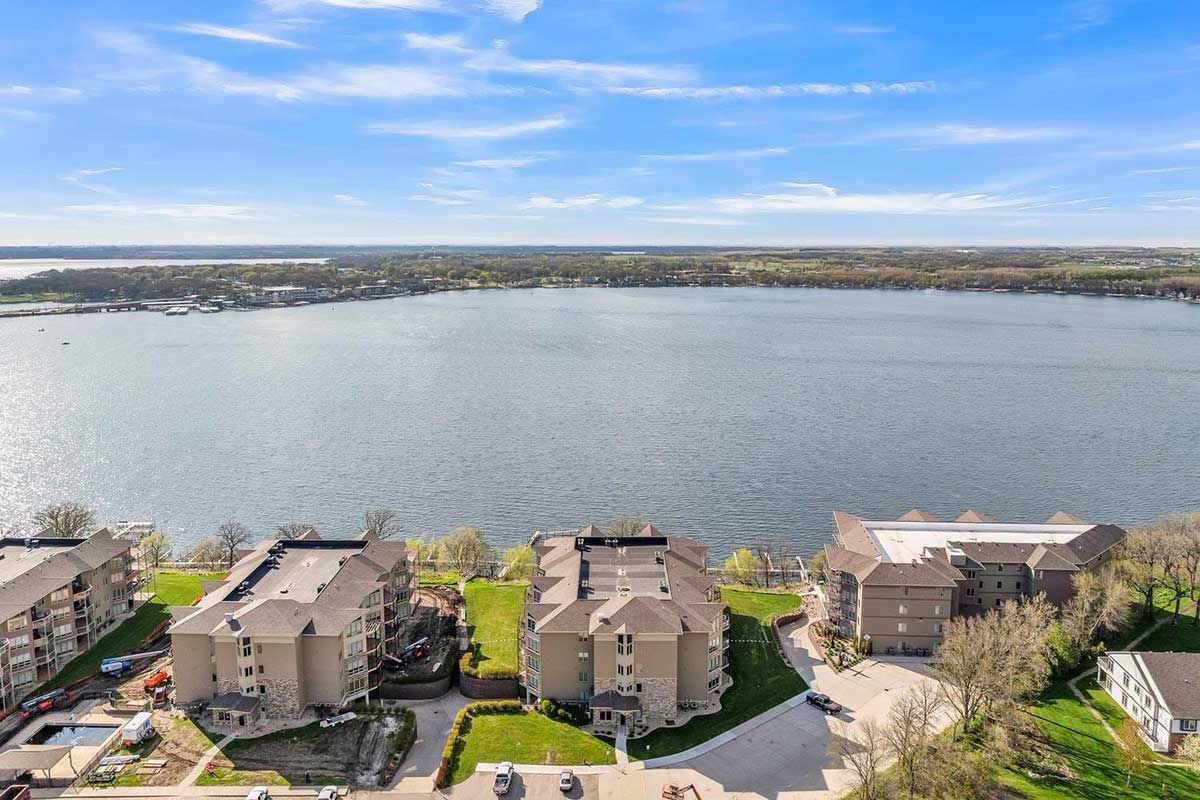
Okoboji condos and lake homes can sit on the same water and still be very different purchases. With a condo, you own your unit plus a fixed share of the land, roof, halls, shoreline, and often the docks. An association runs those shared pieces, sets the dues, and writes the rules on boat slips, rentals, and special assessments. A lake home gives you the ground, the frontage, and every dock decision, along with every bill that comes with it. Before you choose a condo, read its declaration, its bylaws, and the last year of board minutes. Those documents decide what you are really buying, and they can decide whether a lender will finance it.
Key Takeaways
- A boat slip is not automatic. It can be deeded, assigned, leased, or on a waiting list.
- Under DNR rules, renting a private slip to an outsider for cash can make the dock commercial unless the permit allows it.
- Low dues can hide thin reserves and a special assessment after the roof, seawall, or docks need work.
- How a building handles rentals can decide whether a conventional lender will finance a unit there at all.
- Compare a condo and a lake home over ten years, with dues, slip fees, and an honest reserve guess.
Why do so many lake buyers start with a condo?
Most of the people who call me about condos either aren’t ready to own a lake house yet, or they owned one and they’re done with it. Underneath, it’s usually the same thing. They want to be on the water in July and not think about the place in February. A condo gets them a short walk to the docks for a lot less than frontage on the same lake, and somebody else worries about the gutters.
Where people get into trouble is buying one like it’s a hotel room they get to keep. You’re really buying into a small government. There’s a board and a budget, and a roof that’s going to need replacing whether you make it up this summer or not. Go in knowing that and a condo is a great way to own at the lakes.
What do you actually own when you buy an Okoboji condo?
Condos in Iowa are created under the Horizontal Property Act, Iowa Code chapter 499B. Your unit is its own parcel of real estate, taxed on its own, and with it comes a fixed percentage of the shared property: the land, the exterior walls, the roof, the halls. That percentage is written into your deed, and it’s how your share of the building’s bills gets figured.
Some pieces are reserved for one unit or a few, like an assigned parking stall, and in some buildings the boat slip is one of them. The declaration, bylaws, and floor plans are all on record with the Dickinson County Recorder. If somebody tells you a unit comes with something, that’s where you check.
What kinds of Okoboji condos are there?
They aren’t one market. I sort them into three groups.
Resort-style complexes are the bigger buildings, mostly around Arnolds Park, where the amenities are a big part of what you’re paying for. Some offer on-site rental management. They’re easy to own, but this is the group where I’d look hardest at the rental rules and the financing, for reasons I’ll get to below.
Small lakeside associations are older buildings with a handful of units, a lot of them right on the shore, run by the owners. Dues usually run lower. Part of that is that the board is often three neighbors who volunteered, and nobody wants to be the one who raises them. Some of the best water access on the chain is in buildings like these, but read their reserves closely.
New construction on the big water almost never happens. I helped put together the sale of the Four Seasons and the Dry Dock Lounge on Highway 71, and that ground is now Dry Dock Estates, 27 units and the first new condo project on West Lake in about twenty years. We market those units, so weigh my opinion accordingly. When new West Lake condos do come up, they price like the frontage under them.
Does a condo come with a boat slip?
Sometimes. It’s the first thing I ask about. I’ve heard everything from “yes, it’s deeded” to “there’s a waiting list, and nobody can tell you how long it is.” In between you’ll see slips the board hands out by seniority or lottery, and slips you lease every year on top of dues.
An association can charge its members to cover the cost of providing dock access, so a slip fee is normal. What an owner generally can’t do is rent their slip out to somebody else for cash. Under the Iowa DNR dock rules, renting out mooring space turns a private dock into a commercial one unless the permit allows it.
Association docks also have to come out before December 15, same as everyone’s, except in a handful of DNR-exempt spots like the West Okoboji canals and Okoboji Harbor. Ask who pulls them each fall and what it runs.
What do condo dues cover, and what don’t they?
Dues pay for the routine: insurance on the building, snow removal, mowing, sometimes water and trash, and a contribution to reserves. Ask for the actual budget, not a summary of it.
Special assessments are the other bill. When the roof or the seawall needs replacing and reserves can’t cover it, the board splits the cost among owners by the percentages in the declaration. Wind and ice are hard on a building at the water, and shoreline work is never cheap.
That’s why low dues don’t impress me by themselves. A well-run building can have them. So can a building where nobody has wanted to raise them in ten years. The minutes tell you which.
If a board runs the building, Iowa law requires its meetings to be open to owners and its records to be open for inspection, so ask the seller for the last twelve months of minutes. Unpaid assessments follow the unit, too. A buyer is entitled to a statement from the association showing what the seller owes, and isn’t liable for more than that. Your closing attorney should request it.
Can you rent it out, and will a lender finance it?
Whether you can rent depends on the bylaws, which can be amended, and buildings range from nightly rentals to none at all. I’ve owned rental houses up here since 2010, so I’m not against rental income. What most condo buyers don’t hear until their lender brings it up is that rentals and financing are tied together.
With a house, the lender looks at you and the house. With a condo, the lender also reviews the whole project, which means the budget, the insurance, any lawsuits, and how the place operates. Fannie Mae, whose rules most conventional loans follow, won’t buy loans in certain condo projects, including ones that run like a hotel or resort and ones that make owners share rental income with the association or a rental company. If a building lands on the wrong side of that line, you’re usually looking at a portfolio loan from a local bank, or cash.
An established building and a bigger down payment usually make it simpler. For a second home in an established project, Fannie’s streamlined limited review applies at 75 percent loan-to-value or lower, roughly 25 percent down. New construction gets a heavier review. My advice: before you write an offer, text the building name to your lender and ask if they can finance a unit there the way you plan to use it. Our financing resources cover what to have ready.
When does a lake home make more sense than a condo?
A condo fits if you’ll use the place a handful of weekends plus a week or two in summer, if you live three or four hours away, and if you’d rather write a check for upkeep than spend Saturday on a ladder. Plenty of buyers also use a condo as a trial run, then buy a house on whichever lake they end up liking. Our lake by lake comparison helps with that part.
A house fits when the boat is the point. You decide when the dock goes in and how many hoists sit off it, you’ve got a garage for the boat, and no board is voting on your deck stain, but every repair is on you.
The mistake I see most is picking a condo because the price per bedroom looks friendlier. Add the dues, the slip fee, and an honest guess at the next assessment, and run it out ten years next to the house. Sometimes the condo still comes out ahead, just less often than people expect. If you’re on the other side of this, selling a lake home to downsize, here’s our take on whether to list your lake home now or wait for spring.
What should you ask for before you write an offer?
- The declaration and bylaws, plus every amendment.
- The rules and regulations, including rentals, parking, boat and trailer storage, and what you can change inside the unit.
- Twelve months of board minutes. Look for the roof, the seawall, the docks, and insurance.
- The current budget, the reserve balance, and any special assessment approved or under discussion.
- The association’s statement of unpaid assessments on the unit.
- The slip arrangement, in writing.
- The master insurance policy, so you know what your own policy has to pick up.
- Your lender’s answer on the project.
A seller with nothing to hide will have most of that in a folder already. Have an attorney read anything legal in it.
How we help condo buyers
Jensen Real Estate works across lake homes, condos, land, and commercial property on all four lake areas, and I own rental property here myself. When you send me a condo listing, I’m going to ask about the slip, the reserves, and the rental rules before I ask about the countertops. If a building has a problem, I’d rather you hear it from me in week one than from your lender in week five. Browse current listings across the Iowa Great Lakes, or start with our complete guide to buying a lake home in the Iowa Great Lakes.
Frequently Asked Questions
Do Okoboji condos come with boat slips?
Some do and some don’t. A slip can be deeded, assigned by the board, leased each year, or not offered at all, so get the arrangement in writing and ask whether it transfers with the sale.
What is the difference between condo dues and a special assessment?
Dues cover routine costs and reserves. A special assessment is a one-time charge when a big repair, like a roof or seawall, costs more than the reserves can cover.
Can I rent out my Okoboji condo when I’m not using it?
Only if the bylaws allow it, and those rules can change after you buy. How a building handles short-term rentals can also affect whether a conventional lender will finance a unit there.
Is it harder to get a mortgage on a lake condo than a lake house?
It can be, because the lender reviews the whole project, not just you and the unit. Buildings that operate like hotels or make owners share rental income are generally ineligible for conventional loans.
Should I read the board minutes before I buy?
Yes. Minutes can show disputes, special assessments, and how the board handles roof, seawall, or dock repairs. Ask the seller for the last twelve months, and have an attorney read anything legal in them.
Looking at a condo at the lakes?
Send me the building you’re considering, and I’ll tell you what I know about it and what to ask the seller for. If it sits on shared shoreline, our breakdown of lakefront vs lake access in Okoboji is worth a read too, since a lot of condos fall under the same rules. And if you buy somewhere else, or not at all this year, you can still call or text me with a question down the road at 712-320-7245. I’m the local guy who knows those things. You can also reach the Jensen team here or stop by the office on Hwy 71 in Arnolds Park.