
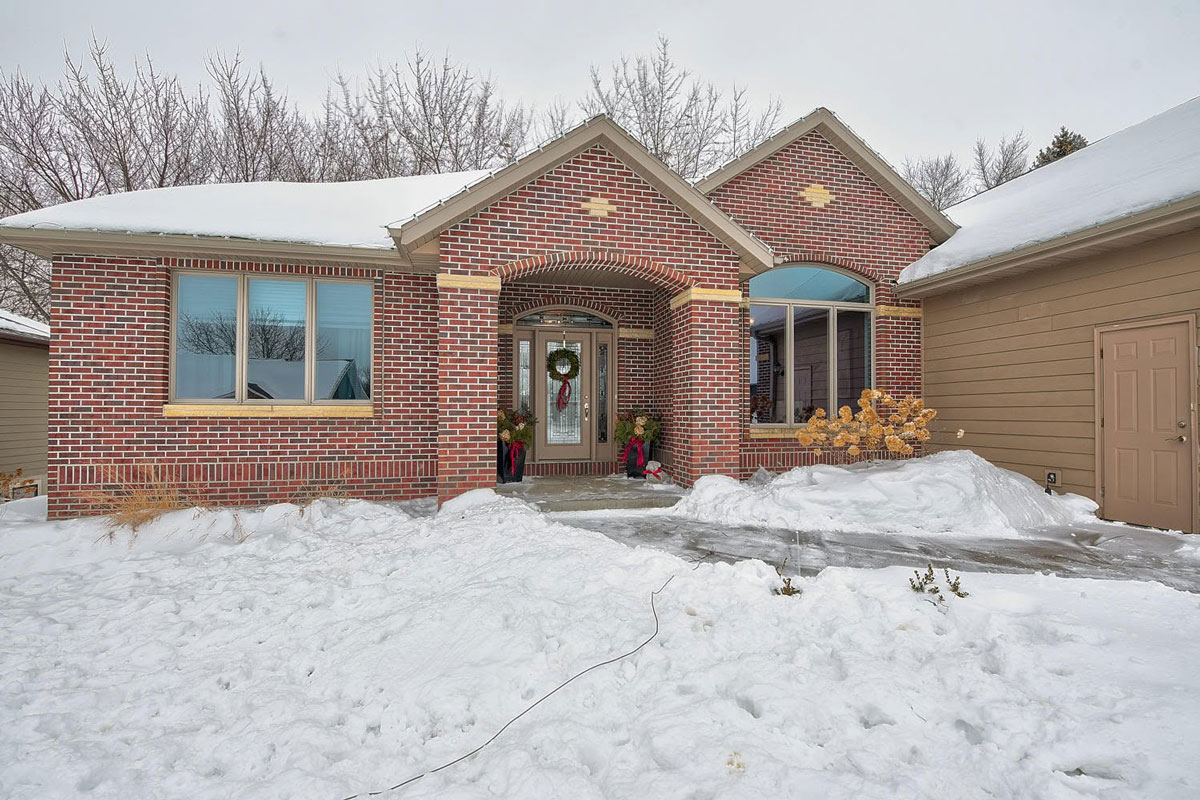
Buying a lake home in winter in Okoboji can work in your favor, as long as you know what the season hides. From December until ice-out there are fewer buyers looking, and the sellers still listed usually have a real reason to sell, which can leave room to negotiate. The catch is you can’t see the water, the shoreline, or the dock, and a septic inspection in frozen ground may have to wait for spring. Write the offer around that, line up what gets checked after ice-out, and you can close by March and still have the dock in before Memorial Day.
Key Takeaways
- Winter means fewer buyers and more motivated sellers, but good waterfront still doesn’t sit long.
- Snow and ice hide shoreline, bottom, and dock, the things that set lake property value.
- If frozen ground blocks a septic inspection, Iowa lets the buyer sign an agreement to inspect later, and that buyer owns the result.
- Docks come out by December 15, so check the sections on shore and confirm the permit while you can.
- Closing by March leaves time to get on a dock installer’s spring list.
Is winter a good time to buy a lake home in Okoboji?
For the right buyer, yes. The national advice says winter is slow everywhere, so buy then and save. That’s half right here, and the other half is where people get burned.
Okoboji runs on the lake calendar. At Jensen Real Estate we see the same thing every year: from Thanksgiving to ice-out is the quietest stretch we have. Showings drop off. Second-home owners have the holidays on their minds, not the lake, and nobody tours lakeshore in a January wind for fun.
So the buyers who are out in winter are serious, and usually the sellers are too. A place still listed in December tends to have a reason behind it, often an estate, or a second home that just isn’t getting used. That’s where the room to talk comes from.
The other half is the part people skip. A lake home is mostly priced on things you can’t see under snow. Understand that going in, write your offer around it, and winter can be the smartest time of year to buy. Skip it and you’re paying lake prices for a house and a guess.
What can’t you see on a lake property in winter?
The water, mostly. And on these lakes, the water side is where the value is.
- The bottom. Sand, rock, or muck at the end of the dock changes how you use the place. You won’t know which until the ice is gone.
- Depth and weeds. Some bays stay clear and deep all summer. Others get shallow and weedy by August. Same lake, different summer.
- The shoreline. Riprap, a seawall, a steep bank, all buried under snow in February. Erosion doesn’t show until it melts.
- Summer traffic and noise. A quiet cove in February can be a busy channel on the Fourth of July.
None of that is a reason to walk away. It’s a reason to do your homework before you write the offer.
Ask the seller for summer photos and any drone shots. If the place has sold before, ask us to pull the old listing photos from the MLS, since a lot of them were taken in summer. Ask your agent what that bay is like in July. Some of these places I’ve sold three or four times, so I can usually tell you what the water out front looks like in August.
And my blunt take: if you’ve never spent a summer weekend on the lake you’re buying on, don’t make January your first look at it. Go in the spring, see the water, and if you want to wait, come back in the winter when there’s less competition. Our West Lake vs. East Lake comparison is a good place to start if you’re still deciding which one you’re on.
What does winter show you better than summer?
Plenty, and if you might use the place year-round, this is the section to read.
- Heat and insulation. You’ll feel drafts, see ice dams on the roof, and find out whether that furnace keeps up at ten below. In July every cabin feels warm enough.
- Access. Who plows the road? On shared lanes and in some lake associations it’s the owners, and that should be in writing. A steep north-facing drive tells you everything in January.
- The real utility bills. Ask for winter heating and electric bills. They tell you what year-round use costs, and whether the place was built for it.
A seasonal cabin and a year-round home can look alike in July. Winter separates them fast, and your lender may care, since a cabin without year-round heat or access can be underwritten differently. Ask before you write the offer, not after the appraiser has already been out.
How do inspections work when the ground is frozen?
Most of the inspection works fine in winter. The house, the roof, the furnace, the electrical all get looked at the same way they would in June. Two things need a plan.
Septic or sewer?
First find out which one the place is on, because it changes everything.
A big share of the lakeshore is served by the Iowa Great Lakes Sanitary District, which covers the cities around the lakes and parts of the unincorporated shoreline. Being next to the district isn’t the same as being in it, though. The property has to be annexed to get service, and the district will confirm that if you call. They also recommend a sump pump inspection before you buy, because sump pumps aren’t allowed to drain into the sewer.
If the property is on a private septic system, Iowa’s time-of-transfer law requires a certified inspection before the deed transfers. When frozen ground makes that impossible, state rules let the buyer sign a binding agreement with the county board of health to get it inspected once conditions allow.
Here’s the part to understand. That agreement is signed by the buyer. If the spring inspection turns up a system that needs work, you’re the owner by then, and you own the problem. So if a winter closing means a delayed septic inspection, settle up front how a failed system gets handled, a price adjustment or money held back at closing. Talk to your attorney and lender about how to structure it.
Winterized plumbing
A lot of seasonal places are drained and winterized by November, so the inspector can’t run the water or test the fixtures unless someone turns it back on. Ask the seller to have the place dewinterized for the inspection and winterized again after, and put in writing who pays if a frozen line shows up. If there’s a private well, the water test needs running water too.
What happens to the dock and lift when you buy in winter?
By the time you’re shopping, the dock is out of the water. Iowa’s dock rules require docks to be removed from public waters before December 15 unless a permit condition says otherwise. I live on West Lake, and by mid-December the shore is lined with stacked dock sections. For a buyer that’s handy: you can walk the sections, look at the legs and decking up close, and check the lift for rust or a bent frame, which is hard to do from the shore in summer.
A few things to settle in the purchase agreement:
- The dock, lift, and any boat hoist are named in the agreement. Don’t assume they come with the house. Buyers assume that and don’t get it, and it’s a fight you don’t want in March when the installer is already booked.
- The dock permit is current with the Iowa DNR and matches what’s actually there. A missing or mismatched permit shows up in the summer, when it’s harder to sort out.
- You know who put the dock in last spring, so you can call them.
We cover permits, shared docks, and setbacks in more detail in what to know before buying lakefront in Okoboji.
How much negotiating room is there in a winter deal?
More than in June. Less than people hope.
A well-priced piece of West Lake frontage doesn’t go on sale because it’s January. What winter gives you is time and fewer people bidding against you. You can make an offer without three others landing the same weekend, and you can ask for a longer inspection window, which matters here, because that’s where you find out what you’re actually buying.
The best asks are the ones easy for a seller to say yes to. Covering the spring dock install is a common one. So is leaving the lift in the deal. These are about terms, not price, and a motivated seller in December is often ready to say yes.
Price is still set by comps, not the calendar. We pull recent sales on the same lake and the same kind of frontage so you know whether a listing is priced to sell or just fishing. If it’s fishing, winter is a good time to say so, because there’s nobody else in the room to make the seller comfortable.
How do you time a winter purchase so you’re on the water by summer?
Work backward from Memorial Day.
- Now through January: get pre-approved for the kind of loan you need, and set up email alerts so a new listing reaches you the day it posts. Winter inventory is thin, and the good ones move.
- January and February: tour, write the offer with the contingencies above, and get to closing. A financed closing takes several weeks, so a January offer lands well ahead of ice-out. March is the outer edge, tight but possible if you started in January.
- February and March: call the dock installer. When the ice goes out, every dock builder and hoist barge on the lakes gets busy at once, and the spring list fills up. People miss their window because they wait until the week the ice goes out. Don’t.
- After ice-out: finish any delayed septic inspection, walk the shoreline, and get the dock in.
Ice-out doesn’t keep a schedule. It has come in March some years, and in 2018 it held on until April 30 on West Lake, the latest it had been on record at the time. Build in some cushion. Our season-by-season guide to buying and selling covers how the rest of the year plays out.
Where Jensen Real Estate fits
Winter is when local knowledge matters most, because you’re buying a lake you can’t see. The Jensen team is small on purpose: me, Michael Jensen, and the brother-sister team of Matt and Amanda Lippon. I’ve been a licensed broker for more than 18 years and have sold more than 1,000 properties in Dickinson County. Looking at a place in February? We can usually tell you what that shoreline looks like in July and whether the property is actually in the sanitary district, not just next to it. We work across condos, land, and commercial too, not only lake homes, so if a lake home turns out to be the wrong fit, we’ll tell you. We won’t pretend otherwise to make a commission. If you want the bigger picture first, start with our complete guide to buying a lake home in the Iowa Great Lakes, or call the office at (712) 332-8081. I’m the local guy who knows those things, and I’d rather help you buy the right one than sell you the wrong one.
Frequently Asked Questions
Can you get a septic inspection in winter in Iowa?
Sometimes. A certified inspector can often do it if the system is reachable and the ground isn’t frozen solid. Deep snow or frozen ground can make it impossible, and when that happens the buyer signs a binding agreement with the county board of health to have it inspected when conditions allow. Plan in the purchase agreement what happens if that later inspection finds a problem.
Are lake homes cheaper in winter?
Not automatically, and I’d rather be straight about this than give you a nice answer. Prices follow recent comparable sales, not the season. What winter usually gives you is less competition and sellers who are more open to terms, which can turn into a better deal on the right property. But a well-priced West Lake listing in January still sells. Don’t buy the calendar, buy the property.
Should I wait until spring to buy a lake home?
It depends on what you need, and here’s what I think. Spring brings more listings and the chance to see the water, a real advantage, but it also brings more buyers, and in this market more buyers means less room to talk. If you know the lake and the right place is listed now, buying in winter and closing before ice-out puts you on the water for the whole summer instead of half of it. Waiting for spring means waiting for more competition, not a better price.
Looking at a lake home this winter?
Call me, even if you’re not ready to buy. If there’s a place you’re curious about, I’m glad to tell you what it looks like when the ice is gone. Reach the office at (712) 332-8081, send us a message, or stop by on Hwy 71 in Arnolds Park.